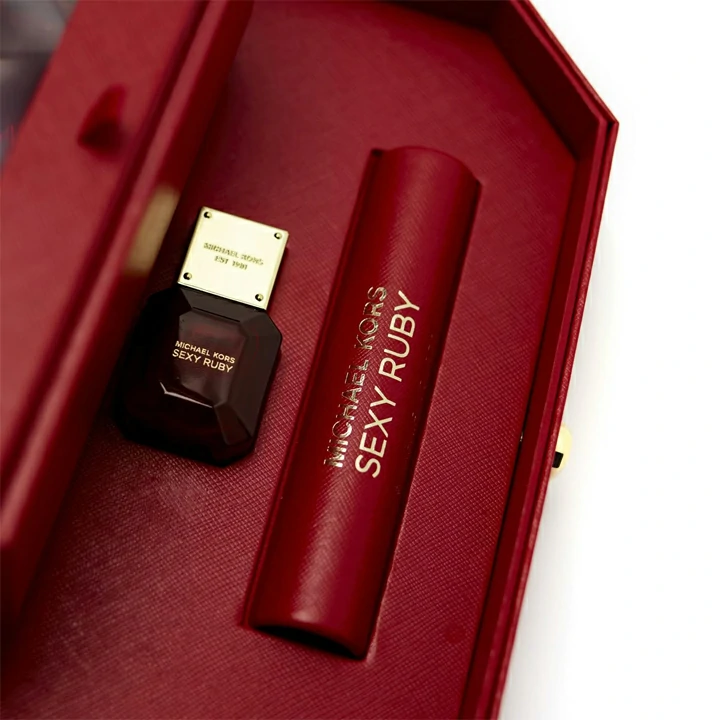
Designing for round packaging is trickier than it looks. On a supermarket shelf, a paper tube isn’t a flat canvas, it's a cylinder that only shows part of its surface. In fact, you can expect only about 40–50% of the tube to be visible at any one time. That means no matter how creative your cardboard tube printing is on a digital screen, most of it might be hidden from consumer eyes.
The goal is not just to make packaging looks good, also it's to create a design something that clearly grabs attention the moment a customer looks at it.
Earthycores designers understand what actually works in a supermarket having millions of products.
Retail shelves aren’t forgiving. Products sit side by side, sometimes stacked behind each other, and lighting can cast odd shadows. With round packaging, the problem gets trickier. Imagine only 40% of a billboard being visible while the other half is hidden from traffic. That's essentially what a paper tube faces on a supermarket’s shelf.
Because of this, designers have to think like consumers. What’s immediately noticeable? What gets lost in the curve of the tube? Understanding this reality is the first step toward creating packaging that actually works in-store.
Here are some ready templates for reference and better understanding about the design of a paper tube that actually works. Click here to download Templates.
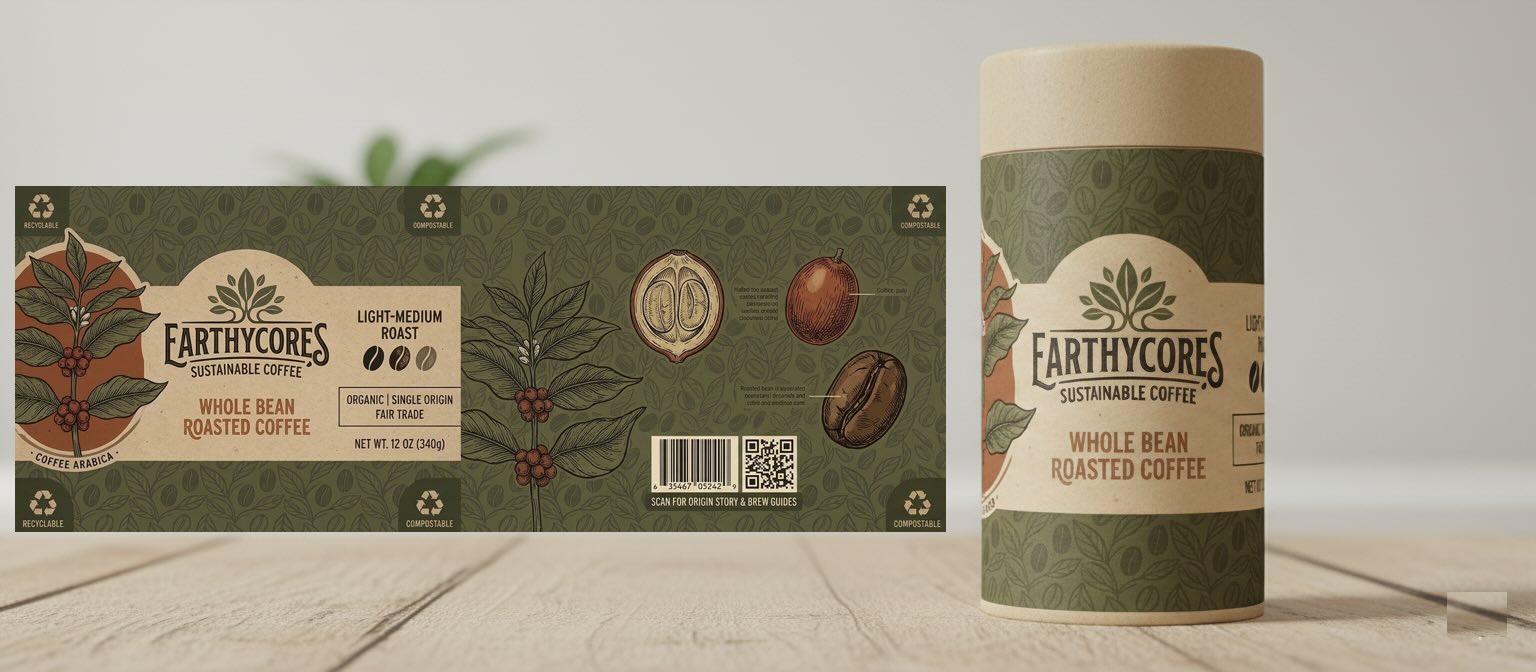
Not everything can—or should—go on the front of a tube. Focus on three key things:
Brand name – Make it easy to spot, even from a distance.
Product identity – What are you selling? Keep it simple.
Key messaging – Highlight the benefit or unique keypoints, but don’t make them crowded.
Less can be more for this purpose. Overloading a tube with text or visuals can confuse consumers instead of attracting them. Think of it as giving someone a single, clear invitation rather than a messy text and visuals of flyers.
To make paper tubes printing work on the shelf, keep these principles in mind:
Clear Branding – Your logo should be instantly recognizable, no small, fancy fonts that disappear on the curve.
Strong Visual Hierarchy – Guide the eye from the brand to the product name to the main message. Don’t make customers hunt for info.
Readable Messaging – Avoid clutter. A few well-written slogans are needed here.
Balanced Design – Clean, Balance visuals, typography, and color. A harmonious design feels easy to understand.
A good test: glance at your tube from across the room. If you can’t tell what it is in two seconds, it probably needs to be replaced with something unique.

• Ready-to-ship stock sizes
• Recyclable kraft paper (with optional foil lining)
• Cost-efficient & ideal for small batches
Even experienced designers can make these mistakes:
Overloading the surface – Too many graphics, textures, or text can make the design confusing.
Awkward wrapping – Too stylish font that are not easy to read for people who are not that familiar with fonts.
Ignoring shelf context – According to the shelf, you should not design like a flat or boxed item.
Here are some ways to test and refine designs before printing a batch:
Use mock-ups – Physical or digital 3D models give you a real sense of what works for a round tube.
Before-and-after comparisons – Show your redesigns next to the original. Often small tweaks make a huge difference.
Test in context – After printing, create a sample and place on a shelf and try looking at it from different angles.
Many teams find that even slight adjustments like moving the logo slightly higher or simplifying the color palette can dramatically improve shelf impact.
Paper tubes look nice if people are aware of your logo and design. If you are a new brand or thinking of changing the design of your existing product which is not doing well in the market you should design accordingly.
A customer should not be confused or have to look carefully at your product. Your company's logo and some important information should be clear on the front 40% of the packaging tube.
Q: How much of a paper tube can a consumer see on the shelf?
A: About 40–50% of the tube’s surface is visible.
Q: What is a mock-up design for a paper tube?
A: It’s a sample or 3D model that shows how your design will look on the actual tube before printing.
Q: How many paper tubes should I buy at first?
A: Usually, ordering between 1,000 and 2,000 tubes is recommended for a first batch.
Q: Which is the best company for making paper tubes in the USA?
A: Earthycores is a leading manufacturer for all kinds of paper tubes.