For Coffee Roasters
Your customer opens a bag of your coffee once. After that, every interaction is a friction point - a clip, a rolled edge, a hand dug into loose grounds, coffee dust on the shelf. The packaging you spent weeks designing is working against the experience you built the product around.
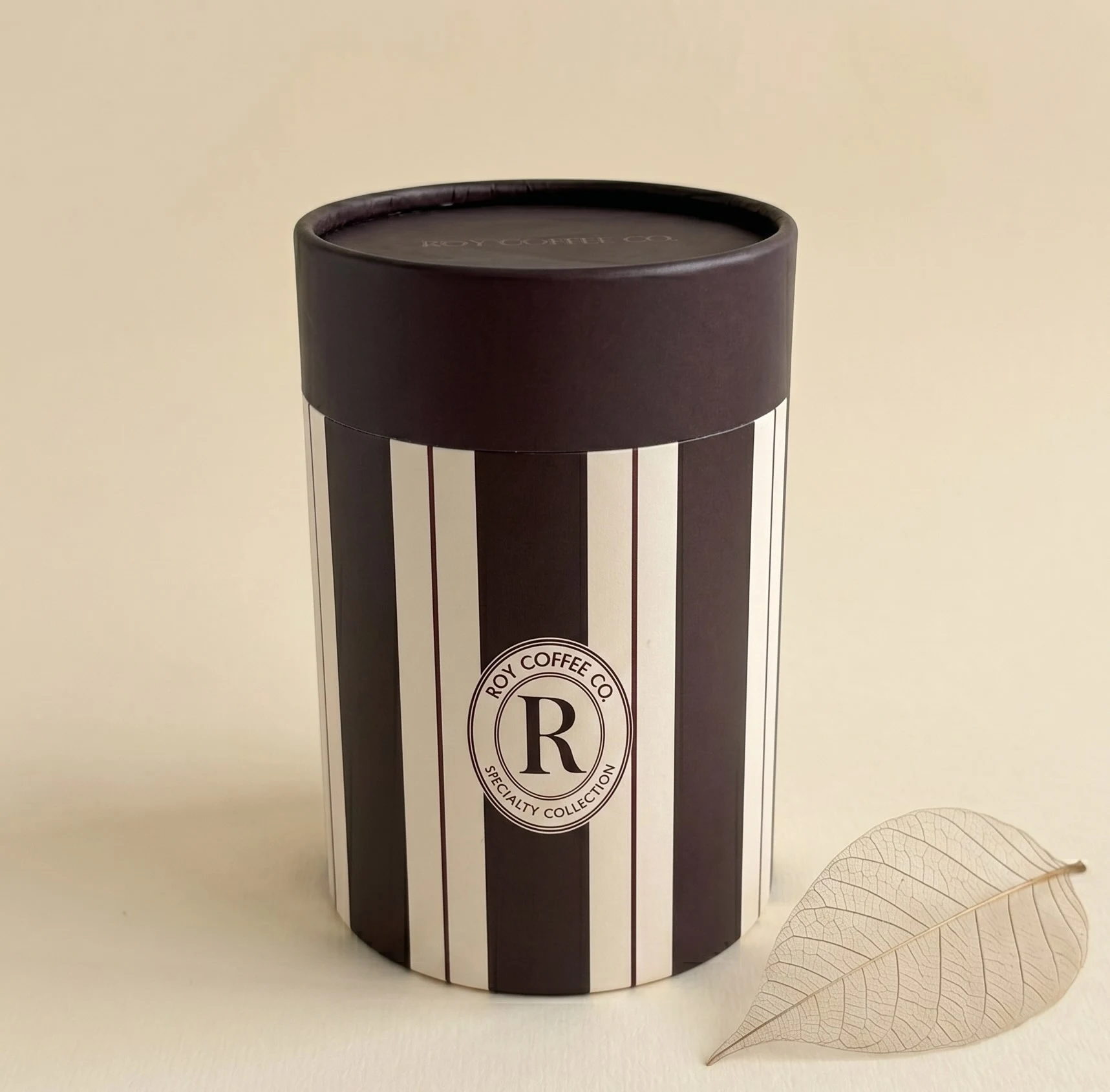
Paper tube packaging eliminates that friction entirely. One cap. Opens clean. Closes clean. Sits upright in any cupboard without a second thought. For specialty roasters competing on experience as much as origin or roast profile, that difference is not cosmetic - it's the product.
Roasters who have made the switch report fewer complaints about stale coffee, stronger repeat purchase rates, and customers who keep the tube on the counter rather than burying it in a drawer. The packaging becomes part of the daily ritual instead of an obstacle to it.
It's 6am. She has 20 minutes before she needs to leave for work. Coffee is the first task. She opens the cupboard, pulls out the coffee bag, unclips the seal, folds back the top, reaches in for a scoop - grounds catch on her fingers, a small dust cloud settles on the shelf. She rolls the bag back down, repositions the clip, puts it back. The whole sequence took 40 seconds and left a mess she'll deal with later.
Now the same moment with a paper tube. She takes the tube off the shelf, lifts the cap, takes her scoop, replaces the cap, puts it back. Twelve seconds. No mess. No clip. No digging. The tube sits exactly where she left it.
Paper tube coffee packaging in daily use
That is the interaction your packaging is either enabling or preventing twice a day for every customer who buys from you. Multiply that by 200 customers and a 250g bag that lasts two weeks. Your packaging design is making or breaking 2,800 daily coffee moments every month.
Retention in specialty coffee is won in the 6am moment, not at the point of purchase. A customer who finds the ritual pleasant comes back. A customer who finds it annoying starts looking at other options next time they're in the shop.
Most paper tube manufacturers solve the structural problem - a rigid cylindrical container - and leave the protection problem to plastic liners, plastic-backed foil, or plastic degassing valves. That approach gives you a paper exterior with a plastic interior, which creates a greenwashing problem roasters selling on sustainability are increasingly running into.
The tube construction that makes a genuine plastic-free claim possible starts with multi-layer spirally wound paperboard for the body - typically three to five layers depending on wall thickness specified. Each layer is wound at opposing angles to create a structure that resists both vertical compression and lateral impact without any plastic reinforcement.
The interior barrier is where most manufacturers introduce plastic. A foil liner is standard for oxygen and moisture protection, but the adhesive bonding foil to paper in most constructions contains polyethylene. The alternative is a water-based adhesive system with an aluminium foil layer that remains fully separable at end of life - recyclable through standard paper streams in most municipal systems.
Freshly roasted coffee releases CO2 for days after roasting. Seal it in an airtight container immediately and the package deforms or bursts. The standard industry solution is a one-way degassing valve - a small plastic disc with a membrane that allows CO2 out while preventing oxygen from entering. Every bag of specialty coffee you have ever bought with a "freshness valve" has a piece of plastic embedded in it.
Mechanical degassing in paper tubes solves this without plastic. A precisely calibrated micro-perforation pattern in the tube wall, combined with a layered barrier construction, allows CO2 to migrate through the paper matrix at a controlled rate while the foil liner prevents oxygen ingress. The calibration depends on roast profile, grind size if applicable, and the expected time between roasting and first use.
For roasters packaging within 48-72 hours of roast, this approach works without any valve at all. For roasters operating longer supply chains or exporting, additional degassing accommodation can be built into the cap seal design. Either way, no plastic component is required.
The cap is where the user experience lives. A friction-fit paper cap is the most sustainable option and works well for ground coffee where the opening ritual is predictable and the product is used within two to three weeks. A tin cap adds a premium tactile element - the weight and sound of a metal closure signals quality in a way paper cannot replicate, and it extends the reusable life of the tube significantly.
For whole bean coffee where customers may store the product for longer periods, a cap with an integrated inner seal disc adds a secondary oxygen barrier at the opening. This is particularly relevant for single origin coffees with long flavour development curves where the customer may be working through the tube over four to six weeks.
Child-resistant cap variants are available for roasters selling through dispensaries, health food retailers, or markets with specific child-safety regulations. The mechanism is integrated into the cap design and does not require any change to the tube body construction.
The external surface of the tube takes print differently than flat film or kraft paper bags. Because the substrate is wound paperboard rather than flexible film, the surface holds embossing and debossing without any backing support - the rigidity of the tube wall itself provides the resistance that flat materials require a block to achieve.
Embossed patterns across the tube body - a texture, a logo, a repeating design element - catch light on shelf and create a tactile experience that no flat-pack format can replicate. For roasters in the specialty segment where the product sits next to ten other options, that physical differentiation has measurable impact on trial purchase rates.
Matte and soft-touch laminate finishes work for roasters whose brand identity sits in the minimal or artisanal space. Spot UV on a matte base - a technique that creates contrast between flat and glossy surfaces within the same design - is technically simpler to execute on a tube than on a bag because registration is consistent around a fixed diameter.
Certifications
What to require from your tube supplier before committing to production:
FSC - Chain of custody confirming paper fibre comes from responsibly managed forests. Required for any sustainability claim.
BPI - Commercially compostable certification for the North American market. Required if making compostable claims to US or Canadian customers.
EN 13432 - European compostability standard. BPI and EN 13432 are not interchangeable - a product certified under one does not automatically qualify under the other.
BRCGS - Food safety standard for packaging in contact with food. Expected by most specialty retail buyers.
ISO 14001 - Environmental management certification covering the manufacturing facility, not just the product.
The specialty coffee segment has been running a slow migration away from flat-pack flexible bags for the past three years. It is not uniform and it is not fast, but it is directional. The roasters leading it are not doing so for environmental reasons primarily - they are doing so because the format performs better on the metrics that drive a subscription and repeat-purchase business.
Shelf presence in independent retail is the first driver. A tube stands upright on an open shelf without a peg, a hook, or a display stand. It holds its shape from the first unit to the last. A bag starts selling well and loses its structure as units are removed, eventually collapsing against its neighbours. For roasters getting their first placements in specialty retailers, the tube format requires less negotiation about display and takes less management from the retailer.
The gifting segment is the second driver. Coffee as a gift has grown consistently, and the tube format translates into a gift without additional packaging. A bag of coffee is not a gift - it requires a box, tissue paper, and presentation work to become one. A tube with an embossed finish and a tin cap is already a gift. Roasters who have moved to tubes report a higher proportion of gifting purchases and higher average order values from November through January.
Subscription retention is the third driver, and the one with the clearest data. Customers on coffee subscriptions who receive tubes report higher satisfaction scores around packaging than those receiving bags, and subscription churn rates for roasters using tube packaging are measurably lower than the category average. The tube stays on the counter, the brand stays visible, and the customer is reminded of you every morning rather than stuffing a flat bag into a drawer and forgetting which subscription it came from.
Being late to this shift has a compounding cost. The roasters who move first in a given retail account own the tube format in that store. When a second roaster approaches with the same format, the retailer's shelf is already associated with the first brand's tube aesthetic. In specialty retail where shelf space is limited and buyers are cautious about stocking formats that look too similar, being second in a format is significantly less valuable than being first.
The conversation with your wholesale accounts is also easier when you are introducing the format rather than following a competitor into it. A buyer who has already agreed to stock another roaster's tubes is less likely to create a second tube section than a buyer who has never carried the format and sees your product as something new and distinctive for their floor.
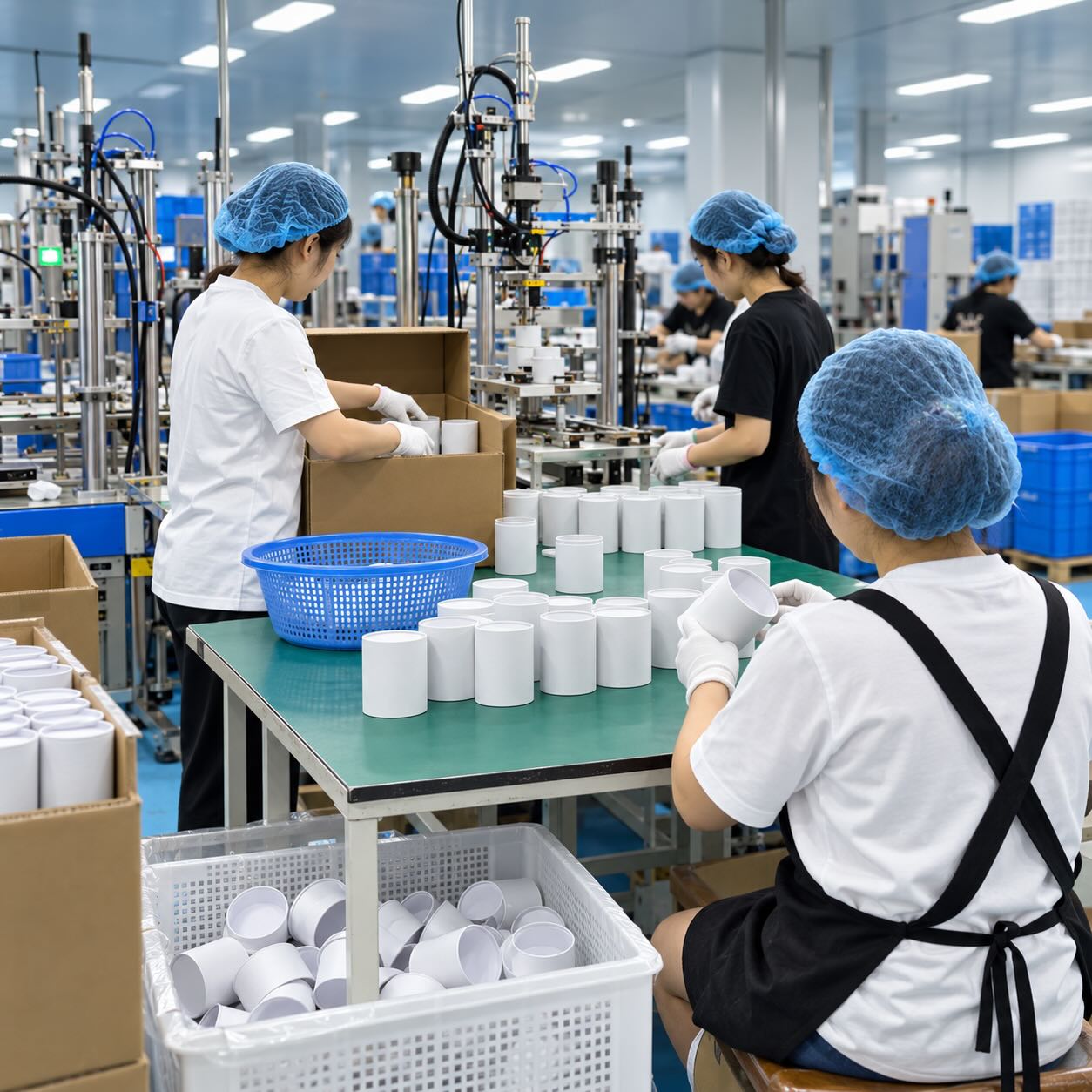
The primary operational question is filling. Tubes fill from the top with standard coffee filling equipment. The rigid body means the tube does not require the support infrastructure that bag filling lines need - no form-fill-seal machine, no bag opener, no clip applicator. A roaster filling by hand or with a basic volumetric filler can switch without capital investment in equipment.
Tube diameter and fill weight need to match. A standard 250g coffee tube runs at approximately 65-70mm internal diameter and 160-170mm height for whole bean, slightly shorter for ground. Specify fill weight and coffee type to your supplier before finalising dimensions - a tube designed for a light, voluminous single origin whole bean needs different internal volume than one designed for a denser espresso blend.
Lead times for custom printed tubes from a 1,000-unit MOQ run at 20-30 days from artwork approval to shipment in most cases. Blank tubes - plain kraft or white exterior with a label applied - can be held in stock and turned around faster. The label approach sacrifices some shelf presence but preserves flexibility for small batch or single-origin releases where volume is unpredictable.
The pricing question is straightforward: tubes cost more per unit than bags at equivalent order quantities. The relevant comparison is not unit cost in isolation - it is unit cost against the retention and AOV data your current packaging is generating. A tube that costs 40 cents more per unit but reduces subscription churn by two percentage points pays for itself within the first renewal cycle for most roasters running subscription volumes above 300 active subscribers.