Choose between lockable child-resistant tubes and standard cardboard packaging for supplements. Learn how ASTM D3475 certified tubes protect children while maintaining brand quality.
Your supplement brand is launching. You have the formula right. The label design is locked. Then you hit the packaging decision. Standard cardboard tube or lockable child-resistant tube? This choice determines two things. First, whether you comply with federal regulations. Second, whether customers trust your brand enough to buy it.
Here is what most brands get wrong. They think child-resistant packaging is only for prescription medications. It is not. The Federal Poison Prevention Packaging Act applies to any product that could harm children. Certain supplements. Vitamins for adults. Iron supplements. Products with active ingredients that pose risk. If you are selling these, you do not have a choice. You need a lockable tube.
But there is more to it than legal compliance. Customer expectations have shifted. Parents buying supplements specifically want lockable packaging. They see it as a safety feature and a sign of a responsible brand. Choosing child-resistant tubes is not defensive anymore. It is competitive advantage.
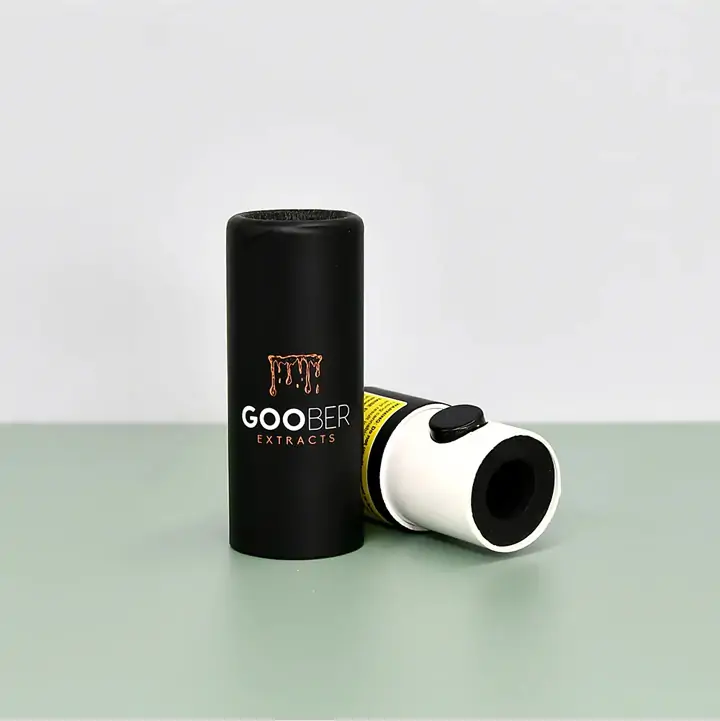
1mm to 1.2mm Thickness
100% Post-Consumer Recycled (PCR) Cardboard
Medical-grade foil barrier
Biodegradable moisture barrier option
Tested for thousands of open/close cycles
This is where most brands misunderstand the specification. Child-resistant does not mean unpoppable. It means a child under five cannot open it in a reasonable time frame. The legal standard is specific. A child must take more than five minutes to figure it out. An adult should open it in less than 30 seconds.
The mechanism in lockable paper tubes typically works through a push-turn or squeeze-twist mechanism. The cap requires simultaneous actions. A child can push or turn individually but cannot figure out the combined motion quickly. An adult recognizes the motion instantly and opens it without thinking.
This is not theoretical. These mechanisms are tested extensively. Earthycores cardboard tubes meet ASTM D3475 certification, which is the federal standard for child-resistant packaging. That means independent testing has verified the mechanism works as intended. A child cannot open it in five minutes. An adult can open it every single time.
Here is what kills cheap child-resistant packaging. The mechanism breaks. After 50 open-close cycles, the cap cracks. After 100 cycles, the child-resistant feature fails. Now you have packaging that is neither child-resistant nor professional looking.
Quality lockable cardboard tubes are built for actual use. Not theoretical use. Thousands of open-close cycles. The 1mm to 1.2mm cardboard thickness matters. The way the mechanism is engineered matters. The material of the cap and closure matters.
When you choose a lockable paper tube, you are choosing a mechanism that survives. Customer reviews will confirm this. Parents buying supplements with quality child-resistant tubes report the mechanism working perfectly after six months, a year, longer. That is the difference between certified quality and cheaper alternatives that cut corners.
Not every product needs child-resistant packaging. If you are selling adult multivitamins with no individual ingredients that pose risk to children, you can use standard tubes. If you are selling specialty products where children are not the concern, standard works fine.
Standard cardboard tubes cost less. The mechanism is simpler. You get the same sustainability benefits. The same protection from light and air. The same premium look on shelf. You just do not have the child-resistant feature.
The decision is straightforward. Check your ingredients. If any ingredient in the supplement poses risk to children if swallowed in large quantities, you need child-resistant. If not, standard tubes are fine. But understand this. Even when not required, many brands now choose lockable tubes anyway because customers expect it.
The Federal Poison Prevention Packaging Act is not a suggestion. If your product requires child-resistant packaging and you ship it in standard tubes, you are violating federal law. That is not a civil issue. That is a regulatory issue.
The list of supplements requiring child-resistant packaging is longer than most brands realize. Iron supplements. Vitamin A in high doses. Certain herbal ingredients. Products with stimulants. If you are uncertain whether your formula requires it, check with a packaging specialist before going to market.
Earthycores lockable cardboard tubes are ASTM D3475 certified, meaning they have passed federal testing. You can confidently ship your products knowing you are compliant. That eliminates the compliance risk entirely.
Five years ago, child-resistant packaging was something brands did because they had to. Today, customers actively prefer it. Parents specifically look for child-resistant tubes when buying supplements. They see it as a sign of a responsible company that thinks about safety.
This has flipped the competitive dynamic. Brands that use lockable packaging are signaling that they care about safety beyond minimum legal requirements. Brands that use standard tubes when child-resistant is available are signaling the opposite.
If your target customer is a parent buying supplements for family use, choosing lockable packaging is a marketing advantage. It is not something to hide. It is something to highlight.
We have written extensively about how child-resistant paper tube packaging works in our detailed guide. The mechanism is certified. The durability is tested. The mechanism does not break after 50 uses.
What matters for your decision is understanding that quality matters. Not all lockable tubes are equal. The thickness of the cardboard. The material of the cap. The way the mechanism is engineered. The testing and certification. These determine whether the tube functions as intended for months and years of use.
Check your ingredient list. Does any ingredient pose risk to children? If yes, you need lockable tubes. That is the legal answer. If no, you have a choice. But understand that many brands now choose lockable tubes anyway because it is what customers expect and prefer.
The cost difference between standard and lockable cardboard tubes is smaller than you might think. The durability difference is significant. The brand perception difference is real.
ASTM D3475 certified child-resistant packaging. 100% recycled cardboard. Durable mechanisms tested for thousands of cycles. Get a quote today.
Request QuoteSame thing, different words. In the industry we use them interchangeably. The mechanism requires a specific motion to open. Push and turn. Or squeeze and twist. A five year old cannot figure it out in five minutes. Your customer opens it without thinking. That is the whole point.
Yes. This surprises most people. We use 1mm to 1.2mm cardboard thickness which is actually more durable than thinner plastic containers. The mechanism stays intact through thousands of uses. Plastic caps crack. Cardboard mechanisms don't. We test this extensively. If a mechanism fails before the customer gets two years of use, we fix the design.
That is federal testing. A third party puts your packaging through the official test. If a child can open it in five minutes, you fail. If an adult cannot open it in 30 seconds, you fail. Pass both tests and you get certified. This is not optional for products that need child-resistant packaging. It is the legal requirement.
Depends on your ingredient list. Iron. Vitamin A above 10,000 IU. Stimulants. Certain herbal compounds. If your formula has these, yes. If you are making a basic multivitamin with no individual ingredient at risk level, no. But here is the thing. Customers increasingly prefer lockable tubes anyway because they have kids or grandkids. Even if not required, it is becoming expected.
Actually recyclable. 100% post-consumer recycled cardboard input. Most municipalities accept them. Pop the plastic cap off and throw the tube in your cardboard recycling. It breaks down naturally. Compare that to a plastic bottle sitting in a landfill for 500 years. This is not green-washing. This is real difference.
We test for 5,000 open-close cycles. Most customers never hit 1,000. The mechanism outlasts the product. Your customer buys the supplement, uses it for six months to a year, empties the tube and recycles it. By then the mechanism has been opened maybe 200 times. We design for the life of the product, not for infinite use.
10-15% premium. That is not nothing but it is not huge either. On a ten dollar supplement you are talking about fifty cents to a dollar difference per unit. But you gain compliance certainty. You gain customer preference. You gain brand perception as a safety-conscious company. Do the math. Usually worth it.