The supplement sector produces 2.3 billion plastic bottles a year. Retail buyers are starting to ask questions. Composite paper tubes are the answer most brands haven't looked at closely enough yet.
About Earthycores: We manufacture sustainable paper tubes with FSC-certified paper, BPI-certified compostable materials, BRCGS global food-grade standards, and soy ink printing. Operating since 2012 with our own factory and warehouses in the US, UK, and Canada. View our certifications here.
Supplement brands put out roughly 2.3 billion plastic bottles every year. Terraseed, a small vitamin brand that commissioned research into the sector's waste footprint ahead of SupplySide 2024, put that number into public view. Less than 30% of those bottles get recycled. About 3% reach the ocean. For a category built around health and clean living, those figures sit badly.
What's shifted recently isn't awareness. Most people inside the industry already knew the plastic problem existed. What's shifted is that retail buyers and distributors have started treating it as a commercial issue rather than a values conversation. Category managers at health food chains are asking packaging questions that weren't being asked two years ago. Some are factoring it into supplier assessments.
The global dietary supplement packaging market sat at USD 12.7 billion in 2024. It's forecast to reach USD 23.1 billion by 2034, growing at 6.1% annually. The direction of that growth is being shaped significantly by packaging preference. Surveys consistently show that 82% of consumers are now willing to pay more for products with sustainable packaging. That's not a niche position. That's the mainstream buyer.
Regulatory pressure is also building in a clear direction. The EU's packaging and packaging waste regulation is tightening. The UK's extended producer responsibility scheme is making plastic packaging progressively more expensive to use at volume. Brands that wait for legislation to force the change will pay more for the transition than those who move now.
The shift is already happening at the small brand level
Terraseed built their entire brand positioning around the plastic waste problem in supplements. Smaller independent brands are now asking detailed questions about composite tube specifications and barrier certifications before they even launch a product. The movement isn't just in enterprise packaging decisions anymore.
This is where most content on paper supplement packaging goes wrong. A plain paper tube without a barrier layer is not a functional replacement for a plastic bottle. Capsules, powders, and tablets need protection from oxygen, moisture, and light. A plain paper shell provides none of that. Brands that have tried it and found poor results were using the wrong specification, not a flawed format.
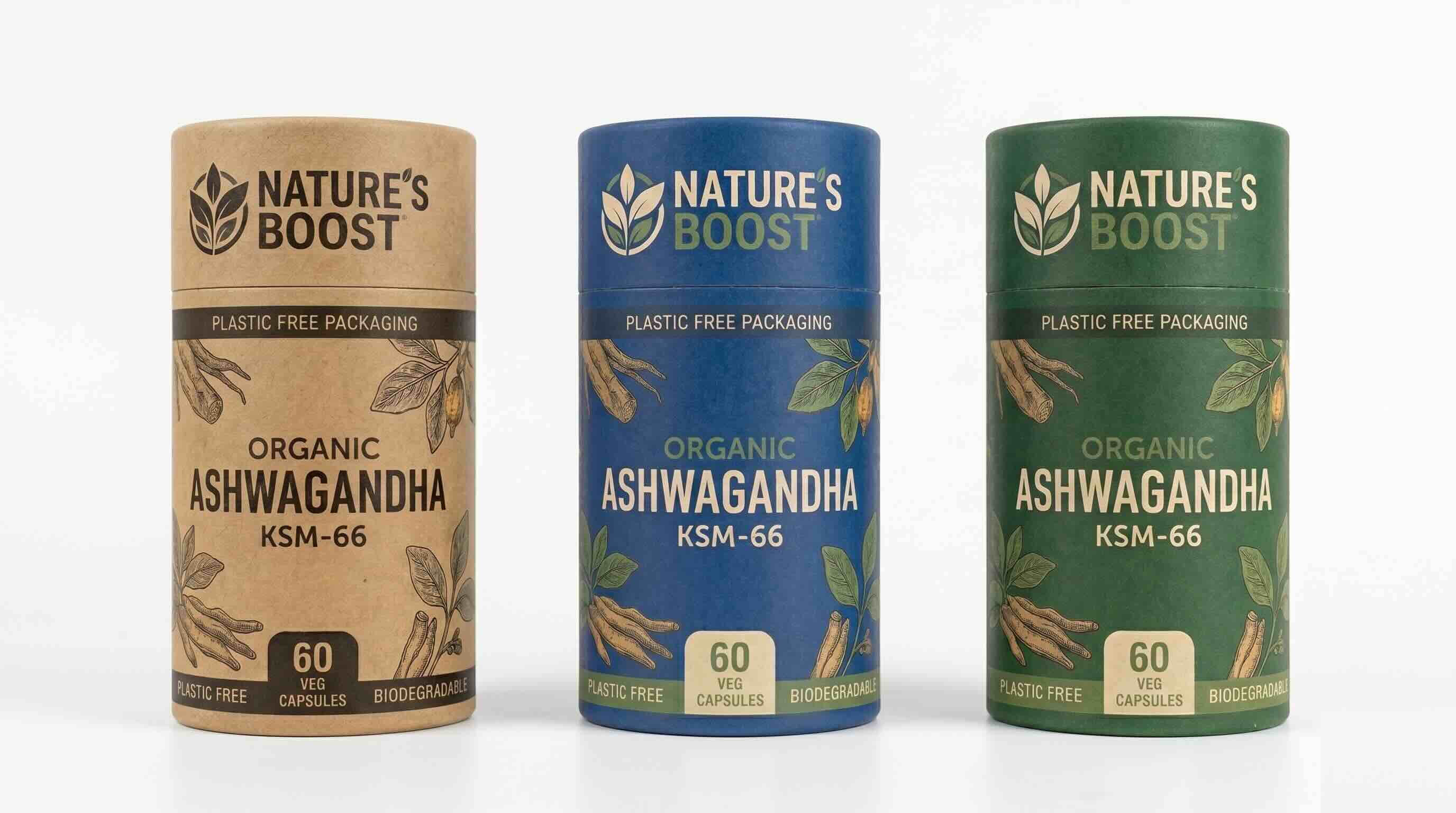
The format that actually works for supplement packaging is a composite tube. The construction that performs best for this application uses a paper outer layer wound to a specific wall thickness, an aluminum foil inner lining bonded to the paper, and a paper base. The foil layer handles barrier performance. It blocks oxygen and moisture at a level comparable to pharmaceutical-grade packaging. The paper outer handles structural strength, print surface, and the sustainability story the brand needs to tell.
Composite Tube Construction
Outer layer: kraft or coated paper, wound to wall thickness between 0.75mm and 2.5mm
Inner liner: food-grade aluminum foil bonded to paper, blocks oxygen and moisture
Base: paper construction, no metal or plastic base components
Cap: paper or paperboard, friction-fit or child-resistant mechanism
Result: Barrier performance comparable to plastic. Fully paper-based end of life. 40 to 50% lighter than equivalent HDPE plastic bottles.
The weight difference matters more than most brands realise before they look at it. A composite tube for a standard 60-count supplement product runs 40 to 50% lighter than the equivalent plastic bottle. At volume, that difference in freight cost is significant.
Print surface is another structural advantage. A cylindrical composite tube gives 360 degrees of continuous wrap print with no interruption from handles, label windows, or base geometry. For brands investing in premium presentation, that changes what's possible at the design stage compared to a standard plastic bottle with a label stuck on the front.
For a detailed breakdown of what supplement packaging needs to protect against and how to evaluate barrier specifications before ordering, see our guide on supplement packaging protection against oxygen, moisture and light.
Most comparisons between paper and plastic packaging are written by people trying to sell one of them. This one isn't. There are situations where a composite tube is the better choice and situations where it isn't. Knowing the difference saves time.
| Factor | HDPE Plastic Bottle | Composite Paper Tube |
|---|---|---|
| Barrier performance | Good | Good (with foil liner) |
| Recyclability | Rarely recycled in practice | Paper recyclable, foil separates |
| Shipping weight | Moderate | 40 to 50% lighter |
| Brand print surface | Label only, limited area | 360 degree full wrap |
| Retail buyer perception | Neutral to negative | Positive, differentiating |
| Regulatory direction | Increasing cost and restriction | Favoured by current policy direction |
Where plastic still wins: very large fill volumes, liquid products, and softgel formats in high counts where the tube geometry doesn't work as a primary container. For powders, capsules in counts up to around 90, and solid formats, composite tubes are competitive on every metric that matters to a supplement brand building for the next five years.
Supplement brands selling into health food retail, pharmacy chains, or online marketplaces with sustainability commitments are increasingly asked to provide packaging certification documentation rather than just making claims on pack. Knowing which certifications carry weight with buyers saves time in the supplier selection process.
FSC Certification
Covers the paper fibre source. Tells buyers the timber came from responsibly managed forests. Certificate numbers are checkable on the FSC database. A supplier that mentions FSC without being able to provide a certificate number is citing a claim, not a verified standard.
BPI Compostability Certification
Independently verifies that the material breaks down under industrial composting conditions within a defined timeframe. Important distinction: compostable and biodegradable are not the same thing. BPI is the certifiable standard. Biodegradable without qualification is often a marketing claim.
BRCGS Global Standards
Manufacturing safety standard for food-contact packaging. Covers factory conditions, quality management, and product safety. Supplement brands selling into major retail will typically be asked for this from their packaging supplier. Not all paper tube manufacturers carry it.
Food Contact Compliance
FSC certification does not automatically mean food-grade. The inner liner material needs to meet food contact material regulations separately, under EU Regulation 1935/2004 or equivalent US FDA standards. Ask specifically about the inner liner specification and its food contact compliance, not just the outer paper stock.
Not every SKU in a supplement range is the right candidate for a tube format. The brands that have managed the transition well tend to start with one product before rolling out across a range. This limits the operational change at any one time and gives a real market test before a full commitment.
Products that work well in composite tubes
Powder supplements in 100g to 500g fill weights
Capsule and tablet formats up to around 90-count
Protein and collagen powder single-serve formats
Herbal and botanical extracts in loose or capsule form
Probiotic and digestive supplement ranges
Premium and gift-positioned supplement products where presentation matters
For supplement brands and distributors looking at the format in detail, the tube packaging supplement options now available include composite constructions with food-grade foil lining, child-resistant closure options, and print capabilities that match what was previously only achievable on rigid plastic. Minimum order quantities have come down to levels that work for smaller independent brands as well as established ranges.
The brands that spend the next 12 months testing composite tube specifications and building supplier relationships will be in a better position than the brands that wait for plastic to become untenable before they start asking questions.
Earthycores Certifications
FSC Certified Paper — responsibly sourced timber, verifiable certificate
BPI Certified Compostable — independently verified, not a claim
BRCGS Global Standards — food-grade manufacturing
Soy Ink Printing — petroleum-free, lower VOC
Manufacturing since 2012 — own factory, US, UK, and Canada warehouses
Looking at Composite Tubes for Your Supplement Brand?
See our supplement tube packaging options or get in touch to discuss your product specifications. Free samples, 1,000 MOQ, worldwide delivery.
Explore Supplement Tube OptionsPlain paper tubes are not a direct replacement for plastic supplement bottles. Composite tubes with a food-grade foil liner are. The distinction matters before you evaluate any supplier or place any order.
The market data, the retail buyer behaviour, and the regulatory direction all point the same way. Brands that test the format now will be ahead of those that wait. The transition is less complicated than most brands expect once they're working with a supplier who knows the specification and can produce a sample worth evaluating.
If you have specific questions about fill compatibility, wall thickness for your product, or certification requirements for the retail channels you're targeting, those are straightforward questions to answer. The hard part isn't the packaging decision. It's finding a supplier who will give you a straight answer rather than a sales pitch.